

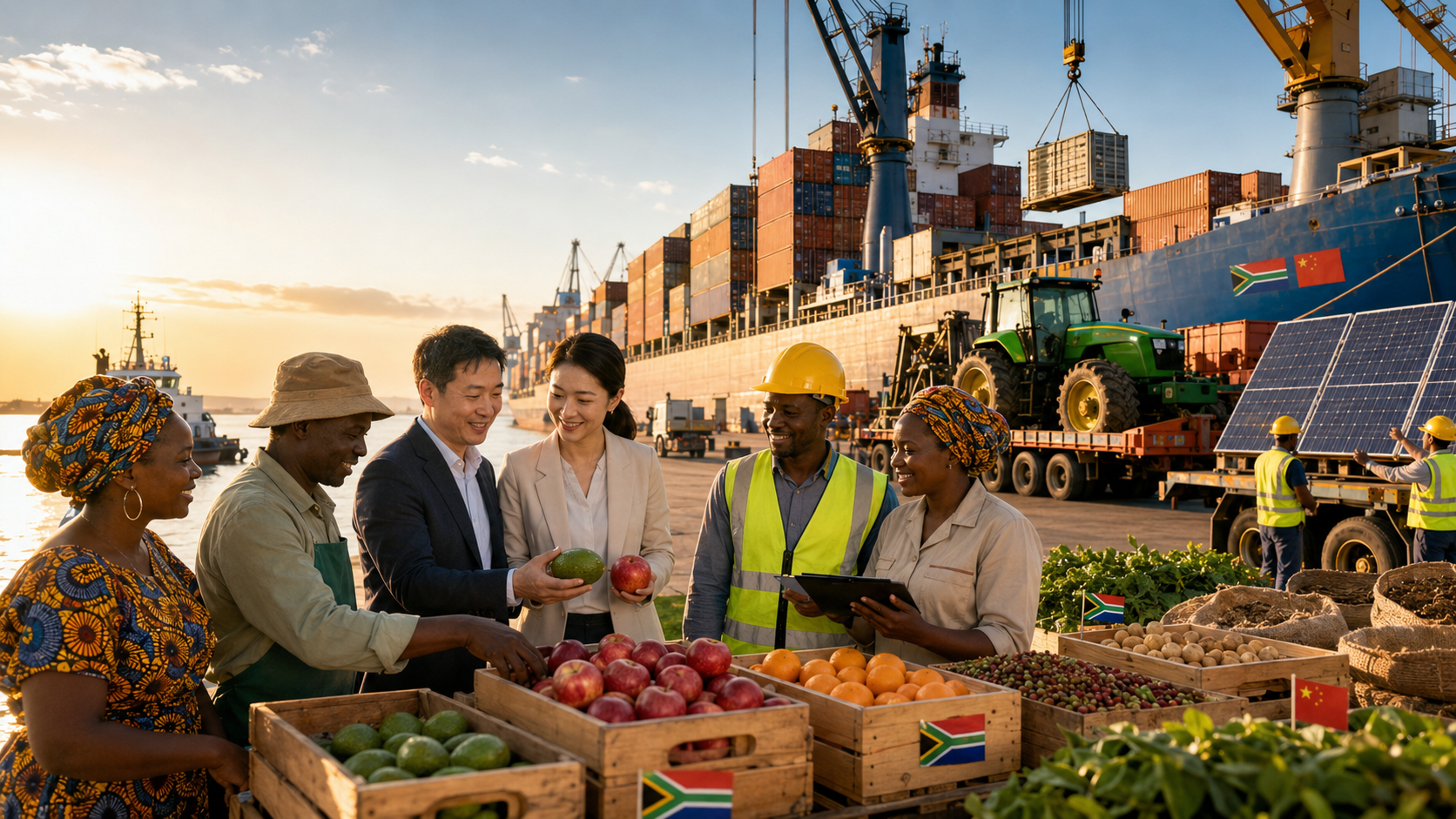
Trade between China and Africa reached a record high during the first half of 2026, showing the growing strength of economic relations between the two sides.
Speaking at a news conference in Beijing on Monday, 27 July 2026, Chinese Foreign Ministry spokesperson Lin Jian said two-way trade reached 1.41 trillion yuan, about US$196.6 billion, during the first six months of the year.
According to Lin, trade grew faster than during the same period in 2025 and could reach an even higher level by the end of 2026.
The growth comes as China continues to open its large consumer market to African products. It also reflects the results of agricultural export agreements, investment partnerships and trade-support measures concluded between China and individual African countries.
Zero tariffs create a bigger market
A major contributing factor is China’s decision to grant zero-tariff treatment to products from all 53 African countries that maintain diplomatic relations with Beijing.
The expanded policy came into effect on 1 May 2026. China had already removed tariffs across all product categories for 33 least-developed African countries in December 2024. The new arrangement extended this benefit to another 20 countries, including South Africa, Kenya, Nigeria and Egypt.
The additional 20 countries will receive the preferential treatment until 30 April 2028 while longer-term China–Africa economic partnership agreements are negotiated. Products must still meet the required rules of origin, health, safety and quality standards.
The practical impact was seen on the first day of the expanded policy when 24 tonnes of South African apples cleared customs in Shenzhen. They became the first African goods to enter China under the new arrangement.
Removing import duties can lower the final price of African goods in China. This makes products such as fruit, coffee, tea, cocoa, nuts, meat, seafood and manufactured goods more competitive.
South African farmers gain new opportunities
South Africa is already seeing practical benefits from its trade relationship with China.
In October 2025, the two countries signed an agricultural protocol allowing South African apricots, peaches, nectarines, plums and prunes to enter the Chinese market. The agreement was the first in which China approved several stone-fruit varieties from one country under a single protocol.
South Africa’s Department of Agriculture estimated that the market could generate about R400 million over five years, with the value potentially doubling within ten years. The first export season was projected to generate around R28 million, rising to R54 million during 2026/27.
In April 2026, China and South Africa also amended the cold-treatment requirements for citrus exports. The change is expected to lower costs, improve efficiency and help fresher fruit reach Chinese consumers.
During 2025, South Africa exported approximately 11.5 million cartons of citrus to China and Hong Kong. The wider citrus industry supports about 140,000 direct jobs on farms and in packhouses, demonstrating how export growth can help protect rural livelihoods.
South Africa and China have also signed a Framework Agreement on Economic Partnership for Shared Development. The agreement covers trade, investment, supply chains, digital trade and inclusive development.
Bilateral trade between the two countries increased from US$34.2 billion in 2024 to US$36.4 billion in 2025. Chinese investment in 103 South African projects was valued at US$8.11 billion and reportedly created 5,694 jobs.
Kenya secures trade and investment agreements
Kenya is another African country seeking greater access to China for tea, coffee, avocados and macadamia nuts.
During President William Ruto’s state visit to China in April 2025, the two countries signed 20 agreements covering trade, infrastructure, the digital economy, education, science and technology.
Investment agreements worth about KSh137 billion, or US$1.06 billion, were also signed. Kenya said the projects could create more than 28,000 jobs in manufacturing, agriculture, tourism and infrastructure.
The deals included a special economic zone in Kilifi County and agricultural projects involving poultry, vineyards and aloe production.
Kenya became the first African country approved to export fresh avocados to China in 2022. Discussions are now continuing with Chinese companies to increase purchases of Kenyan speciality tea and encourage investment in tea-processing factories.
These agreements can benefit farmers through larger markets, better processing facilities and increased demand for value-added products.
Zimbabwe strengthens its export position
China has also become an important market for Zimbabwean products. During the first 11 months of 2025, China was Zimbabwe’s third-largest export destination and received 16.9% of the country’s total exports.
Zimbabwe supplies China with products that include tobacco, minerals and agricultural goods. The opening of new markets for horticultural products, including blueberries, offers an opportunity to diversify beyond traditional commodities and bring smaller farmers into international supply chains.
Trade supports African production
Lin said about 75% of Chinese exports to Africa consisted of capital and intermediate goods. These include machinery, industrial equipment, vehicle parts, electrical equipment and materials used by factories and construction companies.
Such products can help African countries modernise farming, build factories, improve transport and expand renewable-energy systems. Machinery imported from China can therefore be used to produce more goods within Africa instead of serving only household consumption.
Trade cooperation is also expanding into financial services. In June 2026, Standard Bank and the Industrial and Commercial Bank of China were authorised to clear renminbi transactions across several African countries. Direct settlement can simplify payments and reduce some of the costs and delays faced by businesses trading through third currencies.
Turning market access into jobs
China’s zero-tariff policy gives Africa access to a consumer market of more than 1.4 billion people. However, the greatest benefits will come when African countries use that access to expand production and value addition.
Instead of exporting only raw coffee beans, cocoa, fruit or minerals, African businesses can process, package and brand more products locally. This can create jobs in farming, manufacturing, transport, cold storage, packaging, marketing and export administration.
Small businesses and farmers will also need information, training, finance and assistance with export documents. Products must satisfy China’s rules of origin and strict health, safety, packaging and quality requirements.
The record trade figures show that China–Africa economic cooperation is growing. The next important step is to ensure that this growth reaches farms, factories, small businesses and communities throughout Africa.
With zero tariffs, new agricultural protocols, investment agreements and improved trade systems working together, China and Africa have an opportunity to build a relationship that supports industrialisation, food production, employment and shared prosperity.