

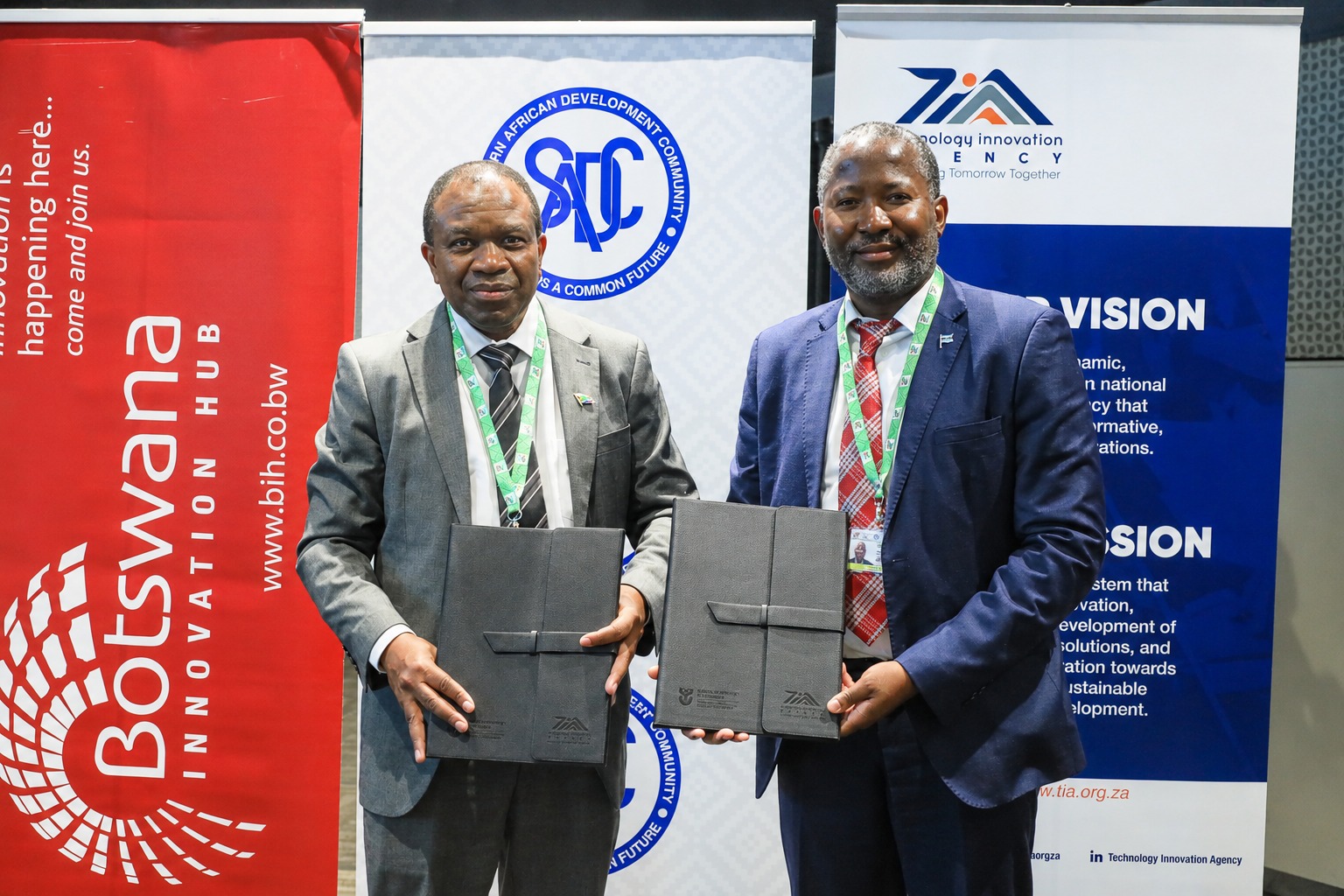
TIA and Botswana Digital and Innovation Hub plan joint fund to support technology commercialisation, startups and regional industrialisation
South Africa and Botswana have strengthened their technology and innovation partnership through a new agreement aimed at supporting startups, researchers and small businesses across both countries.
The Technology Innovation Agency (TIA) and the Botswana Digital and Innovation Hub (BDIH) signed a Memorandum of Understanding in Durban on 28 July 2026. The agreement seeks to accelerate technology development, attract investment and improve the commercialisation of African innovations.
TIA is an entity of South Africa’s Department of Science, Technology and Innovation, while BDIH leads Botswana’s national efforts to turn innovative ideas into businesses, employment and export opportunities.
The partnership supports the renewed scientific and technological cooperation agreement between the governments of South Africa and Botswana. It is also expected to contribute to the Southern African Development Community’s industrialisation goals.
Joint South Africa-Botswana Innovation Fund planned
A central part of the agreement is the proposed establishment of a Joint South Africa-Botswana Innovation Fund.
The fund will serve as a cross-border investment platform supporting joint ventures involving researchers, innovators, startups and innovative small and medium-sized enterprises from both countries.
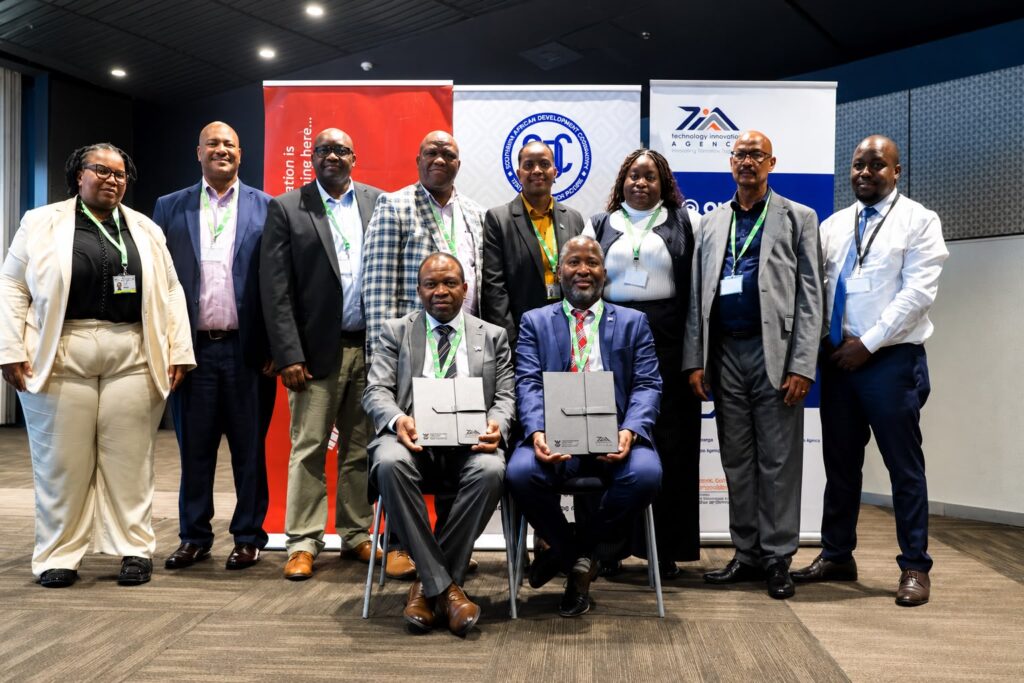
TIA and BDIH will explore introducing the fund in phases and securing additional resources from regional and continental institutions. The longer-term goal is to finance promising technology projects with the potential to be commercialised and expanded across Africa.
The initiative could help address one of the biggest challenges facing African innovators: moving valuable ideas beyond the research and development stage and turning them into market-ready products and sustainable businesses.
Priority sectors identified
The two agencies will cooperate in several areas considered important for economic growth and diversification.
These include green and clean technologies such as renewable energy, climate-smart solutions, recycling, waste-to-value projects and low-carbon industrial technologies.
Agricultural technology will also receive attention, particularly innovations that strengthen food security, climate-smart farming, post-harvest management and the bioeconomy. The partnership will support Indigenous Knowledge Systems, with an emphasis on protecting intellectual property and ensuring fair commercialisation.
In the mining sector, TIA and BDIH plan to support technologies relating to mine safety, smart mining, mineral processing, mine rehabilitation and the beneficiation of critical minerals.
Digital innovation will cover artificial intelligence, cybersecurity, automation, digital platforms, data-driven services, digital public infrastructure and high-speed information transmission.
The agencies will also work together on technology transfer, licensing, incubation, acceleration, investor connections and preparations for commercial expansion.
Opening markets for startups and innovators
The agreement will connect technology-based businesses with customers, investors, research institutions, regulators, corporations, development partners, science councils and industry organisations in South Africa and Botswana.
Joint programmes could include calls for proposals, innovation challenges, pilot projects, technology demonstrations and validation initiatives.
Technical visits, workshops, mentoring and innovation management training will help entrepreneurs and institutions build the skills needed to develop and commercialise technologies.
TIA chief executive Dr Titus Mathe said the partnership supported SADC’s industrialisation ambitions and could help restore Southern Africa’s position as a globally competitive centre of innovation.
“Through the integration of our expertise, resources, and innovation ecosystems, we are establishing new pathways for innovators, startups and entrepreneurs to develop technologies that address societal challenges, attract investment, and attain competitive success in international markets,” Mathe said.
He added that the partnership would help lay the foundation for an integrated cross-border innovation economy supporting sustainable growth, industrialisation and job creation.
BDIH chief executive Kabo Phetlhu said the collaboration would strengthen Botswana’s efforts to diversify its economy through technology.
“Innovation doesn’t stop at borders, and neither should our ambitions,” Phetlhu said.
He said connecting the two countries’ innovation ecosystems and exploring joint investment mechanisms would create a more supportive environment for Africa’s digital and industrial transformation.
Through the collaboration, TIA and BDIH hope to unlock investment, speed up technology adoption and build an integrated Southern African innovation ecosystem. If successfully implemented, the partnership could eventually provide a model for wider cooperation across the African continent.