
More than 150 farmers, business owners, entrepreneurs, Msukaligwa government representatives and other stakeholders from across Mpumalanga, as far as Whiteriver and Bushbuckridge, gathered in Ermelo on Saturday for a landmark seminar aimed at unlocking opportunities presented by China’s zero-tariff policy for African exports.
The Mpumalanga China Zero-Tariff Seminar, held at the Nooitgedacht Agriculture Development Centre in Ermelo today, 15 August 2026, brought together stakeholders from different sectors to examine how the new trade arrangement could be translated into practical economic opportunities for businesses and farmers in the province.
The seminar was hosted by Baobab Ubuntu Media, in partnership with Khanyisa News, Stokvel TALK, and Inner City Gazette, and featured representatives from the Chinese Embassy, Msukaligwa Local Municipality, the African Farmers’ Association of South Africa (AFASA) in Mpumalanga, the agricultural sector, business, academia and civil society.
The event was particularly significant for Mpumalanga as local businesses and farmers were encouraged to look beyond traditional domestic markets and consider the potential of the now easily accessible Chinese market.
China’s expanded zero-tariff policy officially took effect on 1 May 2026, extending zero-tariff treatment to the 53 African countries with which China maintains diplomatic relations.
For South African exporters, the arrangement is being implemented as a temporary non-reciprocal zero-tariff scheme running from 1 May 2026 to 30 April 2028, pending further negotiations between China and the Southern African Customs Union (SACU).
The policy has generated significant interest among African producers, manufacturers, transporters and other complementary industries because it has the potential to reduce the customs-duty barrier faced by qualifying products entering the Chinese market.
However, speakers at the Ermelo seminar emphasised that zero tariffs do not mean zero requirements. Exporters still need to meet the applicable rules of origin, product standards, documentation and other requirements.
“The South African Revenue Service (SARS) began issuing Rules of Origin certificates for qualifying exports from 1 June 2026. SARS has also confirmed that exporters can apply for certificates for qualifying goods exported from 1 May onwards,” said Dr. Moshe Makoka, one of the speakers who specialises in China Studies.
Bringing the global opportunity to the local economy
Opening the seminar, Mr. Austin Moyo, who hosted the seminar, highlighted the importance of connecting international trade opportunities with the realities facing businesses and communities in Mpumalanga.
The discussion focused on how partnerships with China could contribute to local economic development, strengthen businesses and create opportunities across the agricultural and broader economic value chain.
Ms. Siphiwe Phakathi from the Msukaligwa Local Economic Development Department (LED) encouraged businesses to become compliant. She advised that, as a department, they can assist local businesses in putting their documents in order so they can access opportunities such as the Chinese Zero Tariff policy. The message was clear: while China may be thousands of kilometres away from Ermelo, the benefits of international trade can begin with businesses operating in local communities.
For a farmer, this could mean identifying products that have demand in China.
For an entrepreneur, it could mean developing packaging, logistics, storage, processing or other services required by exporters.
For young people, it could mean identifying new opportunities in agriculture, technology, digital marketing, logistics and international trade.
Chinese Embassy outlines opportunities
Representatives from the Chinese Embassy were among the key participants at the seminar, with Mr Zhu Liang, Deputy Director of the Press Section, providing an overview of the China-Africa relationship and the significance of the zero-tariff initiative. The presence of Mr Zhou Bin, First Secretary of the Commercial Section, further strengthened the trade and investment dimension of the event. Mr Zhou gave an overview of the meaning of the Zero Tariff Policy while Mr. Zhu focused on the long-standing relationships between South Africa and China. Their participation provided local stakeholders with an opportunity to engage directly, inside and after the seminar, with representatives of China’s diplomatic and commercial establishment, sharing notes and taking photos.
From tariffs to actual market access
One of the strongest themes to emerge from the seminar was the need for South African businesses to move beyond simply celebrating the removal of tariffs. Dr Moshe Makoka unpacked the background and policy context of the zero-tariff arrangement, including the implementation process, rules of origin and practical considerations for exporters.
The importance of rules of origin was particularly emphasised.
According to SARS, the zero-tariff arrangement applies to goods exported from South Africa to China, subject to compliance with the applicable origin provisions. Exporters must obtain and properly use the required certificate of origin for qualifying products. This means that businesses interested in taking advantage of the opportunity need to understand the requirements before attempting to export. For example, one cannot import goods from a non-qualifying country and then export the same goods to China claiming that they originate from South Africa! The seminar therefore sought to ensure that potential exporters were not left with the misconception that zero tariffs alone guarantee access to the Chinese market.
What can Mpumalanga export?
The question of what Mpumalanga could potentially supply to the Chinese market featured prominently during the discussions. The province has a strong agricultural base and is home to producers operating across a range of commodities and value chains.
Key Product Categories from Mpumalanga:
Agriculture & Agro-Processing: Citrus fruits, subtropical fruits, and nuts.
Forestry & Paper: Wood chips, lumber, pulp, and paper-related goods.
Minerals & Manufacturing: Ferroalloys and stainless-steel products.
Speakers also stressed that exporting is not limited to the producer.
A successful export value chain requires transporters, warehouses, packaging companies, financial institutions, quality-control specialists, customs and logistics professionals, marketers and other service providers. This creates the possibility of a much broader economic impact if local businesses can organise themselves to participate in the value chain.
Agriculture and youth at the centre
Agriculture was a major focus of the seminar, with representatives of the African Farmers’ Association of South Africa (AFASA) contributing to the discussions. AFASA Youth Secretary Maschaba Mofokeng, who just came back from being in China in June, highlighted the importance of ensuring that young people are included in emerging agricultural and international trade opportunities. AFASA Provincial Secretary Nomxoliswa Makhabane also contributed to the discussion on the agricultural sector and the opportunities and challenges facing producers.
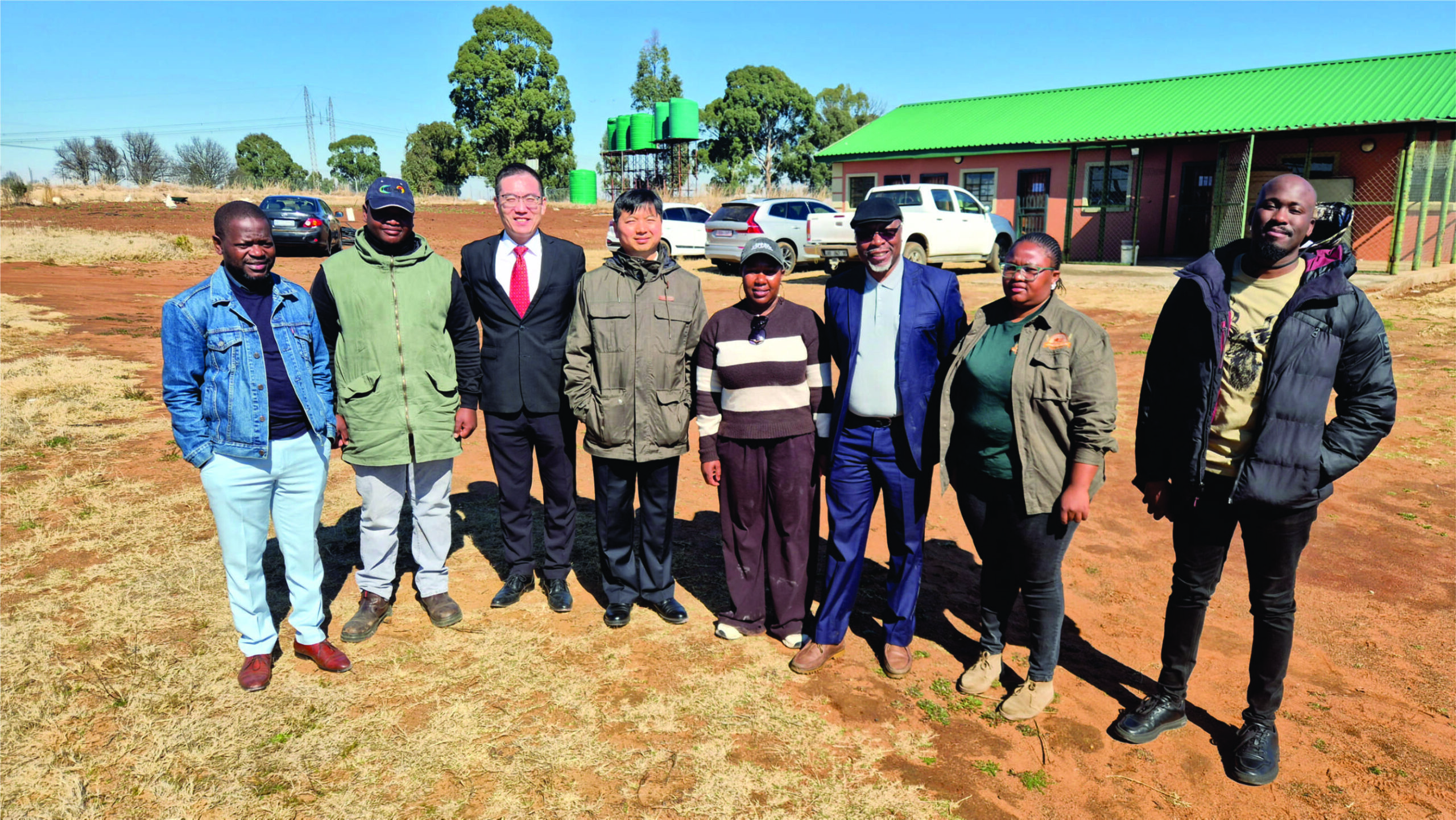
The participation of young farmers, like Optimist Agri Farming, which the delegation visited before the seminar, and agricultural stakeholders demonstrated the importance of ensuring that international trade opportunities translate into opportunities at grassroots level.
Business and stokvels also part of the conversation
The seminar also brought the private sector into the discussion, with SPAR National Communications Manager Ms Mpudi Maubane delivering a message of support and outlining SPAR’s activities involving farmers and stokvels. “Every Spar that you see is owned by someone from your community,” she said. See the separate article focussing on Spar in this issue. The inclusion of stokvels was particularly significant because community savings groups represent an important source of collective financial power in South Africa, and they give access to the 6 billion township economy, which can be educated to access the Zero Tariff Policy value Chain. Participants were encouraged to view collective organisation not only as a means of saving money, but potentially as a platform for strengthening purchasing power, supporting entrepreneurship and building sustainable economic initiatives.
A market of enormous potential
The scale of China’s consumer market was repeatedly highlighted during the seminar. China’s importance to South Africa’s export economy is already substantial, meaning the zero-tariff arrangement should not be viewed as an entirely new trading relationship but rather as an opportunity to deepen an existing one. Recent developments have also demonstrated that the policy is already moving from announcement to implementation. On 1 May 2026, 24 tonnes of South African apples were among the first African goods to benefit from the expanded zero-tariff policy when they cleared customs in Shenzhen. This provided a tangible example of how South African agricultural products can potentially participate in the Chinese market.
From seminar to action
During the discussion session, participants were given an opportunity to raise questions about market access, certification, standards, logistics, volumes, finding buyers and other practical aspects of exporting. The interactive session was one of the highlights of the seminar, with participants seeking practical answers about how they could position their businesses to take advantage of the new trading environment.
The event organisers said the objective was not simply to hold another seminar, but to begin building a network of businesses and institutions capable of responding to international market opportunities.
China-South Africa cooperation continues to expand
The Ermelo seminar comes at a time when economic cooperation between South Africa and China continues to broaden. In recent months, the two countries have also focused on standards and regulatory cooperation, recognising that successful trade requires more than simply reducing tariffs. South African and Chinese authorities have been working on regulatory and standards-related cooperation to support implementation of the zero-tariff arrangement. For Mpumalanga businesses, this reinforces the importance of understanding international standards and improving the quality, consistency and competitiveness of locally produced goods.
The next step: turning opportunity into exports
The strong attendance at the Ermelo seminar demonstrated the level of interest among Mpumalanga stakeholders. More than 150 people from across the province attended the event, representing different sectors and communities. There were people from Msukaligwa, Govan Mbeki, Lekwa, Chief Albert Luthuli, Mkhondo, Pixley ka Isaka Seme, Mbombela, etc.
For the organisers, the next challenge is to ensure that the enthusiasm generated by the seminar translates into practical action. During one-on-one sessions after the seminar, partnerships and strategies were formulated. Online meetings were set up. The seminar was intended as the beginning of a broader conversation about how Mpumalanga can position itself within the China-Africa trade relationship.
The province’s farmers and businesses now face a simple but important question:
What can Mpumalanga produce that the Chinese market wants, and are local businesses ready to meet the standards, volumes and reliability required to supply it? That question could ultimately determine whether China’s zero-tariff opportunity remains a policy announcement or becomes a catalyst for increased production, exports, investment and job creation in Mpumalanga.
A new chapter for local businesses
The Ermelo seminar demonstrated that there is significant interest in taking the China opportunity seriously. But as speakers repeatedly emphasised, zero tariff is not the destination. It is an opportunity. The real objective is to turn market access into increased production, stronger businesses, new export markets, investment and employment.
For Mpumalanga, the journey into the Chinese market may have begun with a seminar in Ermelo. The next chapter will be written by the province’s farmers, entrepreneurs, businesses and institutions that are prepared to take the opportunity from the conference room to the marketplace.
Inquiries related to economic cooperation could be sent to Ms Kelly Li, Secretary of SACETA, aka Chinese Chamber of Commerce: kellysouthafrica@hotmail.com or sacetakelly@hotmail.com